
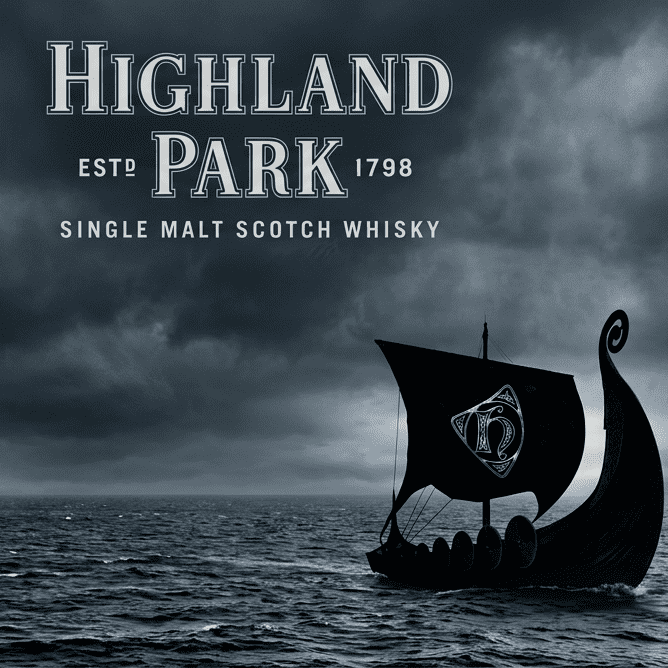
From a tale of illicit whisky and a churchman with a questionable side hustle to one of Scotland’s most distinctive single malts, the story of Highland Park is as characterful as the whisky itself.
There are distilleries that make excellent whisky, and then there are distilleries whose surroundings, traditions and history seem to find their way into every glass. Highland Park belongs firmly in the latter category.
Perched above Kirkwall, on the windswept Orkney Islands, Highland Park has been making whisky since 1798. Far removed from Scotland’s traditional whisky heartlands, it developed an identity shaped by isolation, resourcefulness and a stubborn commitment to doing things its own way.
Its story features illicit distilling, colourful local legends, the influence of Orkney’s Norse past and production methods that have survived generations of change. Most importantly, it helps explain why Highland Park occupies such a fascinating place in the world of single malt Scotch whisky.
The Legend of Magnus Eunson
Excise duties and restrictions made legal whisky production an expensive business, encouraging many enterprising locals to produce spirits outside the authorities’ watchful eye. Orkney, with its remote coastline and strong sense of independence, was no exception.
Enter Magnus “Mansie” Eunson, the man most famously associated with Highland Park’s origins.
Eunson was reportedly a church beadle and part-time whisky smuggler. By day, he occupied a respectable position in the community; by night, according to the stories passed down through generations, he was involved in the production and distribution of illicit whisky.
One of the most enduring tales claims that Eunson concealed whisky beneath a church pulpit, keeping his contraband hidden in a place where the authorities would hardly think to look. Another version of the story suggests that he could rely on his knowledge of local life to stay one step ahead of the excisemen.
Whether every detail is true is difficult to establish, but the legend has become inseparable from Highland Park’s identity.
From Illicit Spirit to Legal Distillery
Of course, legends can only carry a distillery so far. To survive, Highland Park needed to become a legitimate business.
The early nineteenth century saw the operation develop beyond its murkier beginnings, with the distillery becoming established as a recognised whisky producer. Historical accounts identify figures including David Robertson and members of the Robertson family among those associated with its early ownership and development.
By 1826, Highland Park had obtained its distilling licence, marking an important step in its transition into the legal whisky trade.
The distinction matters. Although 1798 remains the traditional founding date, it should not be confused with the date of the first distilling licence.
The Nineteenth Century: Building a Reputation
As the whisky industry expanded throughout the nineteenth century, Highland Park continued to develop under successive owners.
The distillery’s early history is not always straightforward to reconstruct, but by the latter part of the century it was increasingly becoming a commercial enterprise with ambitions beyond the local market.
One particularly important figure was James Grant, associated with The Glenlivet, who acquired Highland Park in 1895. The period around the turn of the twentieth century brought significant development, including an expansion of the distillery’s still capacity.
This was an important moment. Highland Park was no longer merely a remote Orcadian operation with an intriguing backstory. It was a producer whose whisky had commercial value in a rapidly developing industry.
The Twentieth Century: From Blending Ingredient to Single Malt Star
For much of its history, Highland Park's whisky was valued within the blending trade. That was a common fate for malt distilleries before single malt Scotch became a major consumer category.
The twentieth century brought enormous changes to the whisky industry, including periods of economic uncertainty, shifting ownership and changing consumer tastes.
Highland Park became part of Highland Distillers in 1937, joining a larger business with interests across the Scotch whisky sector.
Yet the distillery’s location and traditional production methods continued to give its spirit a character of its own.
By the late 1970s, single malt whisky was gaining greater visibility among consumers. Rather than being appreciated only as one component in a blend, individual distillery bottlings were increasingly being recognised for their own distinctive qualities.
1999: A New Chapter Under Edrington
Another significant milestone came in 1999, when Highland Distillers became part of the Edrington Group.
The change placed Highland Park within a company with substantial experience in the Scotch whisky business, alongside other prominent names in its portfolio.
For Highland Park, the years that followed would see a growing emphasis on the identity of the single malt itself.
The brand began to make greater use of Orkney’s Norse heritage, drawing on Viking history and mythology to create a distinctive visual language.
This approach became especially visible in the twenty-first century, with releases inspired by Norse gods, legends and themes.
Legends from The HP Vault
Next, we take a look at some superb bottlings and series from the Highland Park archives: -
Highland Park 1959 21yo, James Grant 1980 Dumpy

This exceptionally rare Orkney Isles vintage single malt was distilled at Highland Park in 1959 and bottled by James Grant & Co. in 1980.
A legendary 21 year old dumpy bottling that was imported for the Italian market by Ferraretto of Milan and scored a mind-bending 95 points on WhiskyFun - the epitome of liquid gold!
The Whisky Vault Price: net £3,333.33. Buy Here.
Highland Park 1961 16yo, Cadenhead’s 1977 Dumpy
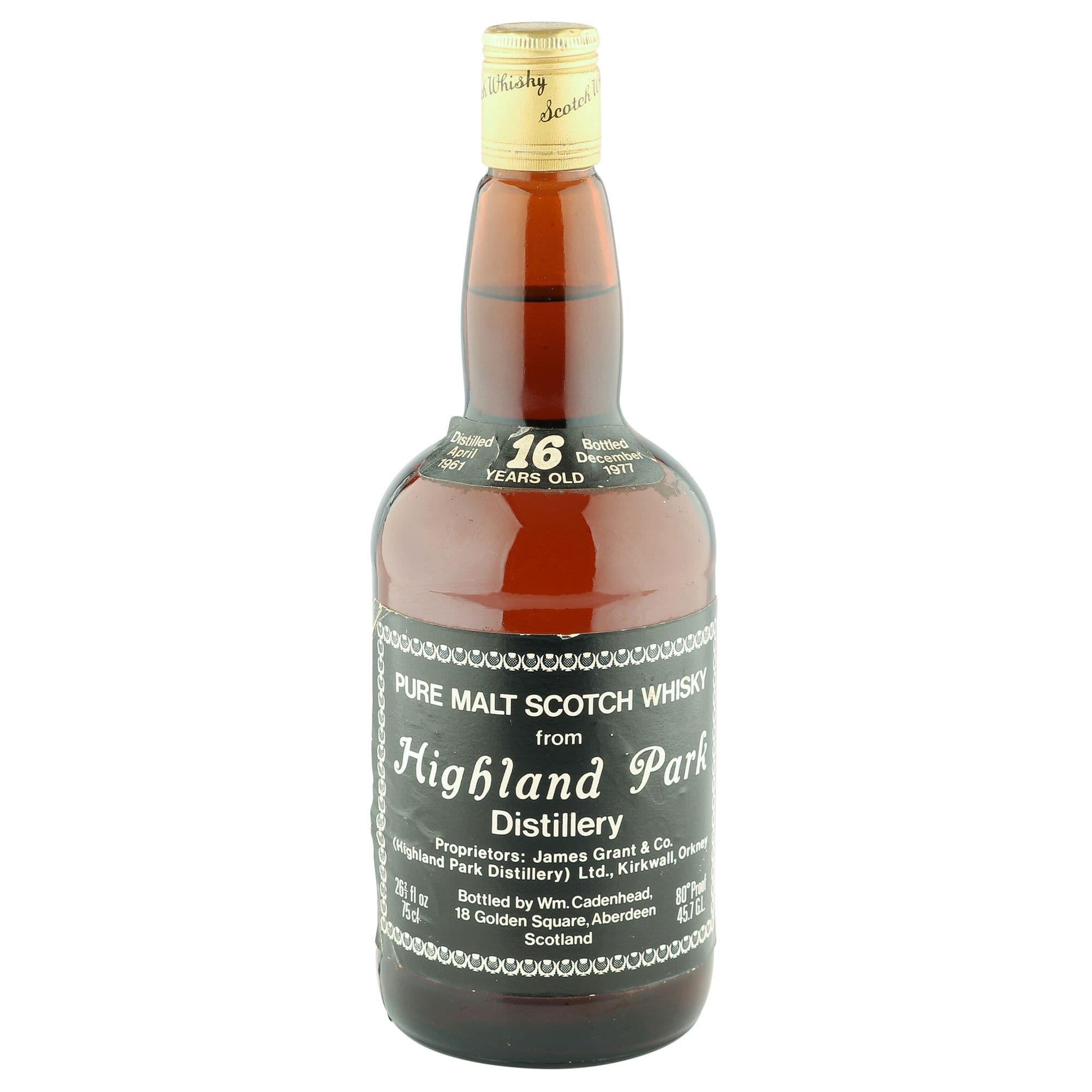
This Highland Park 16 year old was distilled in April 1961 and bottled at 80 proof by Wm Cadenhead, in their famed old style dumpy bottle, in December 1977.
The Whisky Vault Price: net £3,333.33. Buy Here.
Highland Park 1961 36yo, The Dragon 1997 Bottling
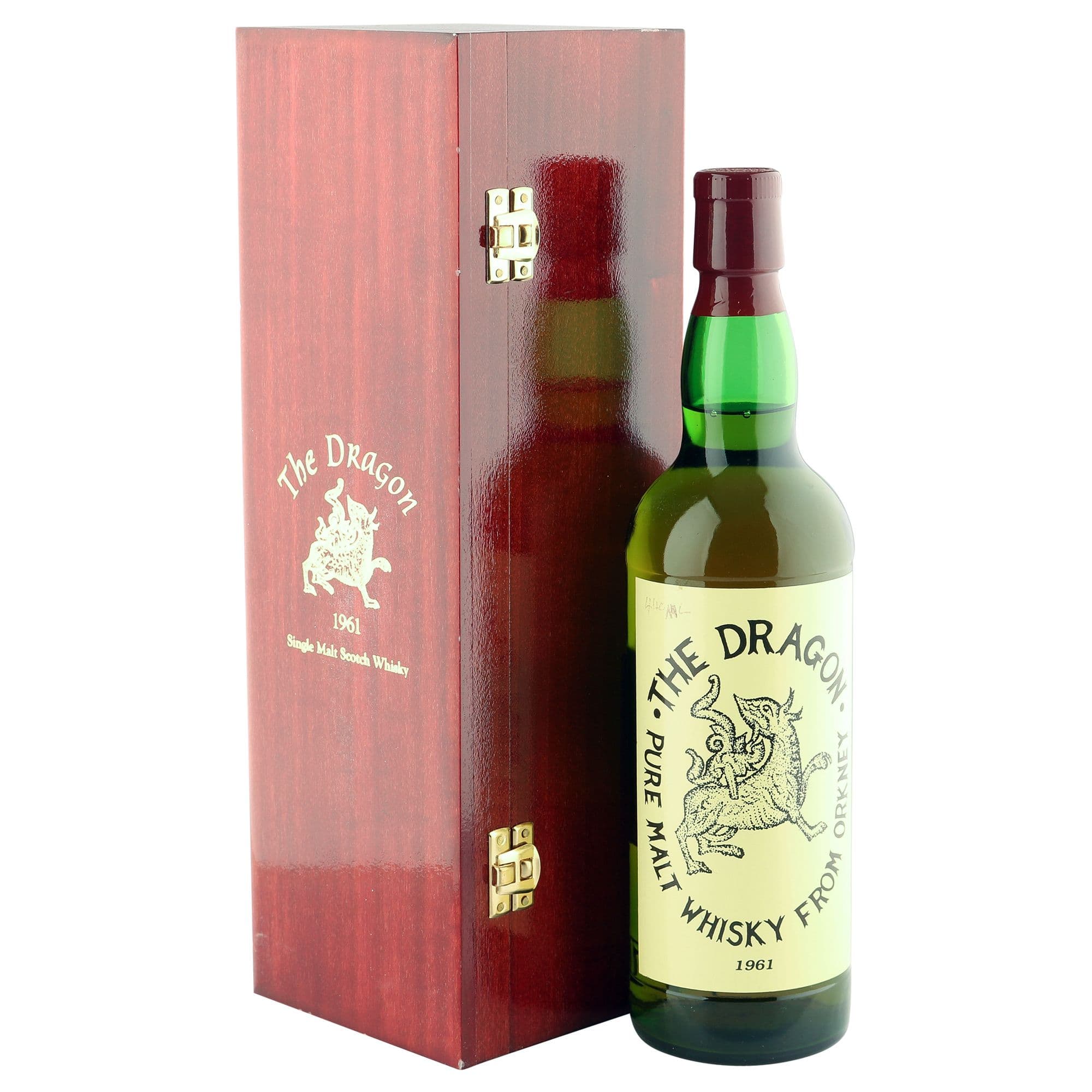
This outstanding Highland Park malt was laid down in single Sherry cask number 4493 during 1961.
After 36 long years of maturation, this liquid gold was bottled by S & JD Robertson Group Ltd of Orkney in 1997 and is one of only 216 bottles awarded an almighty 91 points at WhiskyFun.
The Dragon, from which it takes its name, derives from the 12th Century carving by Norse Crusaders in one of Britain's finest prehistoric buildings, the Maes Howe chambered tomb, Orkney, dating from around 3000BC.
The Whisky Vault Price: net £2,500. Buy Here.
Highland Park 1962 35yo, John Goodwin Retirement 1997 Bottling
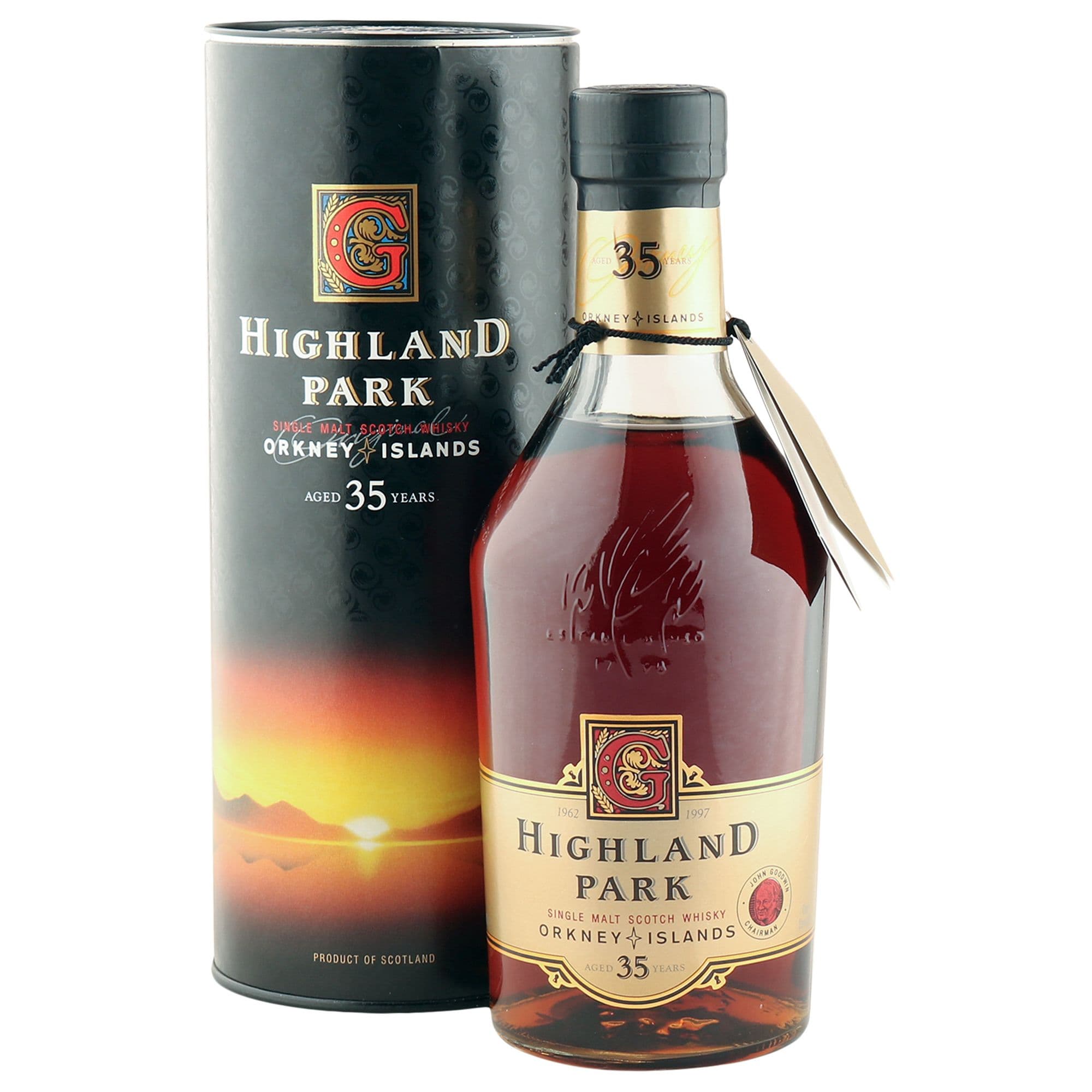
This super rare Orkney single malt was distilled at Highland Park in 1962 and bottled to commemorate the retirement of the then company chairman, John Goodwin.
Bottled at 35 years of age, the same length of time Goodwin spent with the company, this beauty was bottled at a natural cask strength 50% ABV in October 1997, two months before his retirement.
One of just 300 very limited bottles that scored a massive 94 points on WhiskyFun.
The Whisky Vault Price: net £4,583.33. Buy Here.
Highland Park 1965 37yo, John Scott’s 2003 Bottling
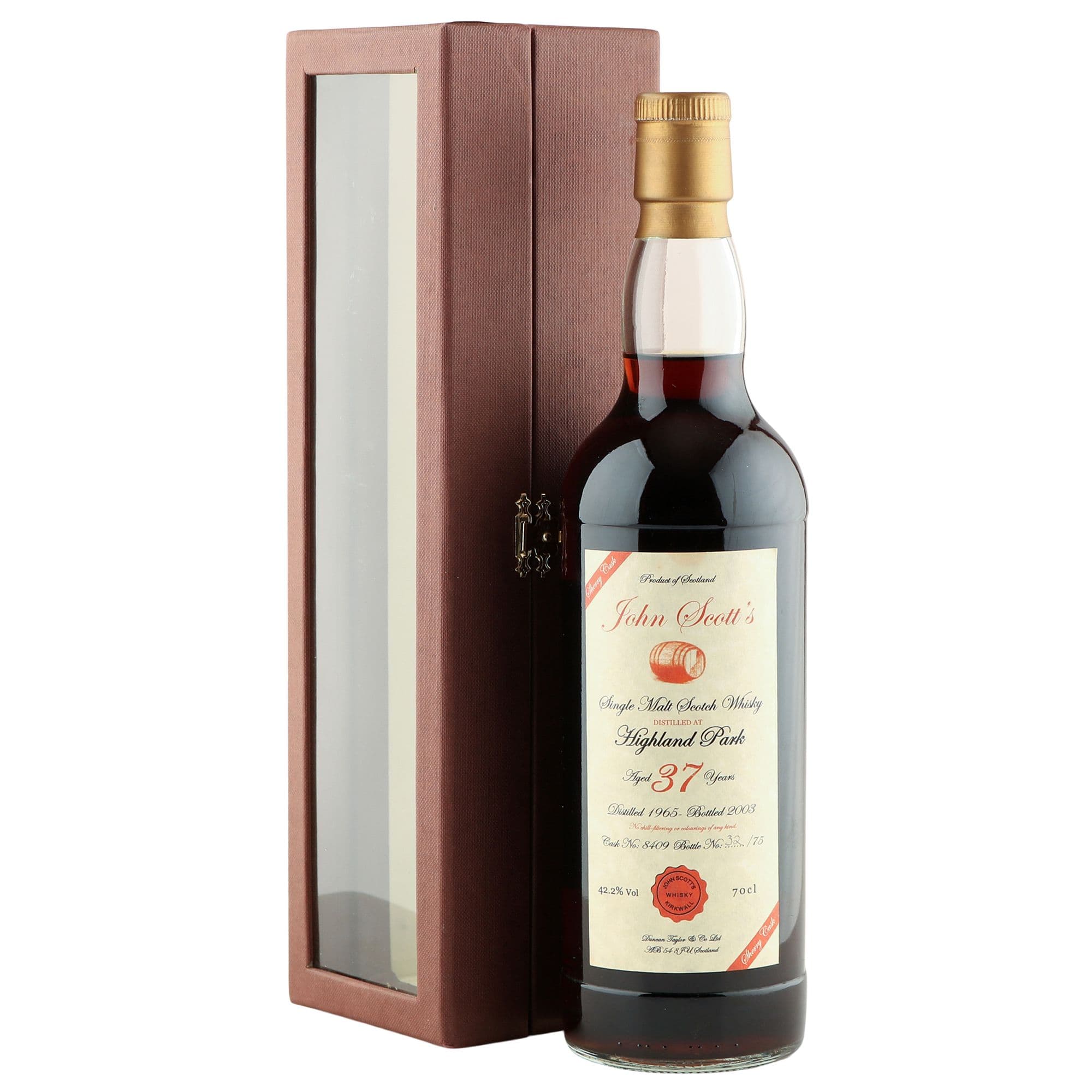
This extraordinarily rare 37 year old Orkney single malt was laid to rest at the Highland Park distillery in 1965 and bottled for John Scott & Miller Ltd under their John Scott's label.
This release is one of just 12 single casks that were laid down in the 1960's by Robert Firth Miller, former proprietor of John Scott & Miller Ltd. The name John Scott, which was the original name of the company, was featured on shop bottling's of Highland Park up until 1955.
Charged from single Sherry cask number 8409 at a natural strength 42.2% ABV, this heavily Sherried stunner is one of only 75 bottles that were bottled in conjunction with Duncan Taylor & Co. Ltd in 2003.
The Whisky Vault Price: net £4,166.67. Buy Here.
Highland Park 1966, Berry Bros & Rudd 1979 Bottling
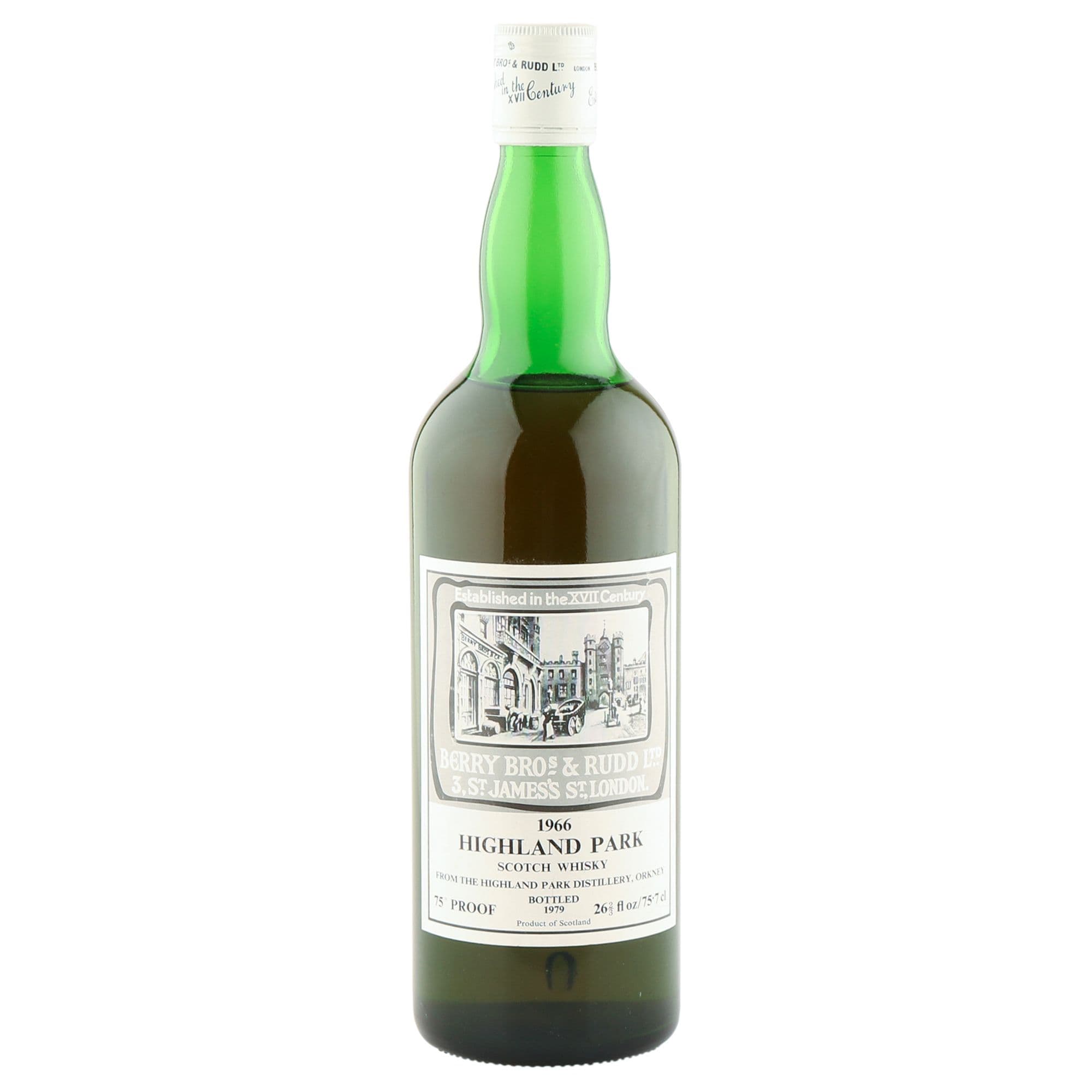
This insanely rare Orkney vintage single malt was laid to rest at the Highland Park distillery in 1966 and bottled by Berry Brothers & Rudd in 1979.
Filled at 75 proof with contents of 26 2/3 Fl. Ozs, this stunning Islander was rewarded with a gigantic 93 point haul from the guys over at WhiskyFun.
The Whisky Vault Price: net £4,166.67. Buy Here.
Highland Park 1968 27yo, Hart Brothers Finest Collection
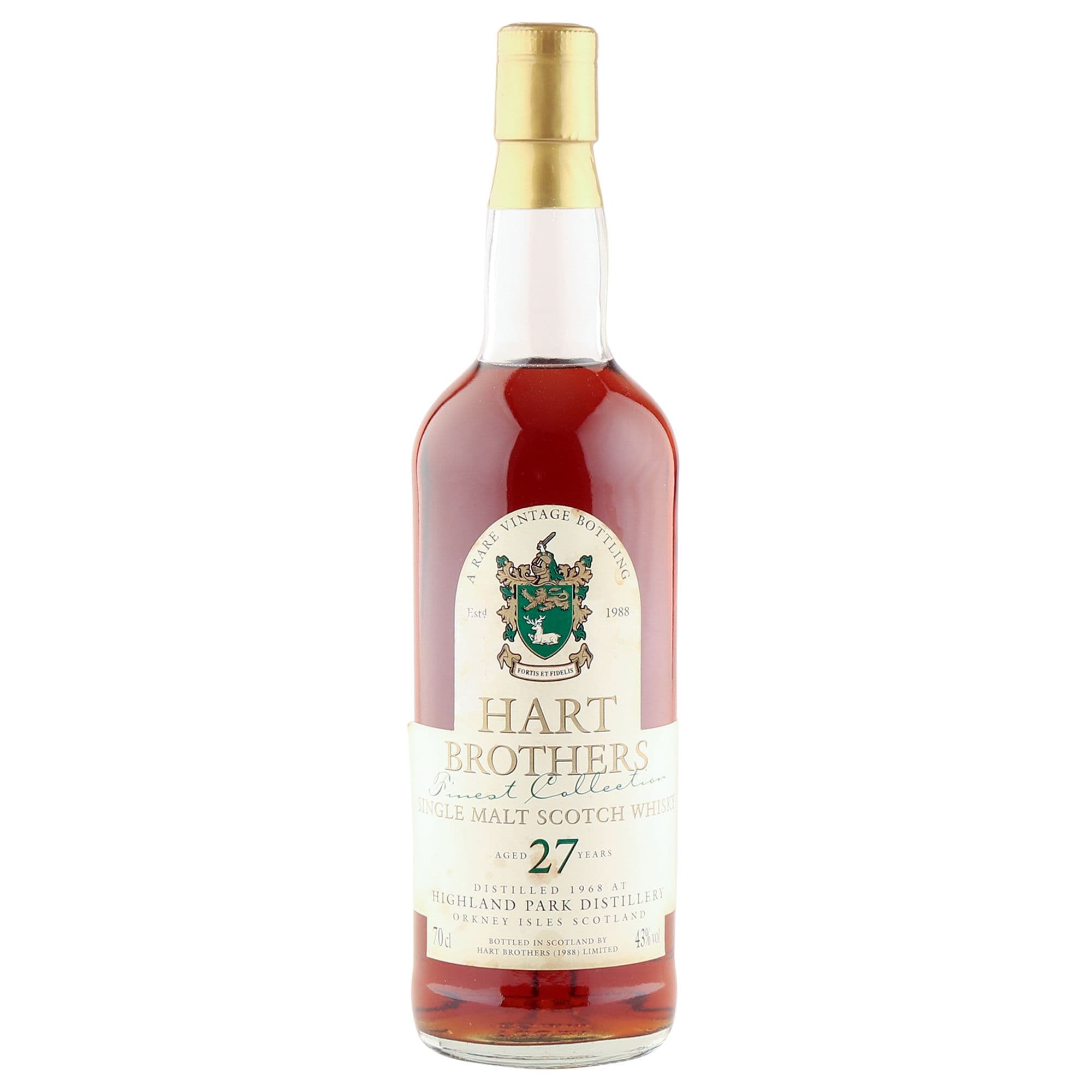
This gorgeous 27 year old Orkney Isles single malt was distilled in 1968 at the Highland Park distillery and bottled for the Hart Brothers Finest Collection series in the mid-1990's.
This collectible rarity scored a smashing 93 points on the well respected critic site, WhiskyFun and was originally imported for the Portuguese market.
The Whisky Vault Price: net £1,208.33. Buy Here.
Highland Park 1970 30yo, SMWS 4.73
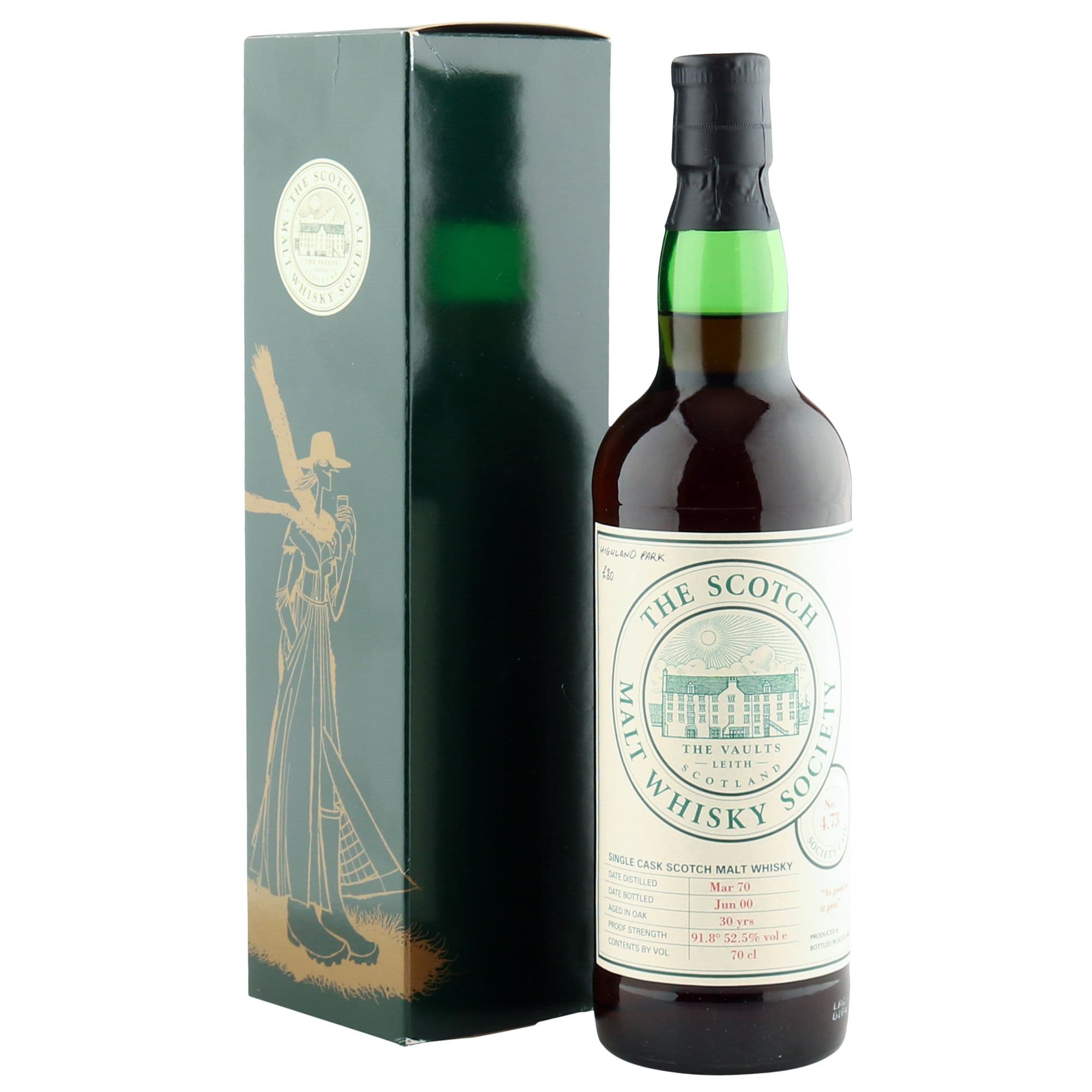
This stunning, very rare 30 year old Orkney Isles single malt was laid to rest at the Highland Park distillery in March 1970 and bottled for The Scotch Malt Whisky Society in June 2000.
Yielded from single Society Cask number 4.73 at a natural strength 52.5% ABV, this very dark sherry distillation is described on the label as a 'As good as it gets'. Who are we to argue?
The Whisky Vault Price: net £2,916.67. Buy Here.
Highland Park 1976 18yo, Cadenhead’s 1994 Oddbins Cask #4646
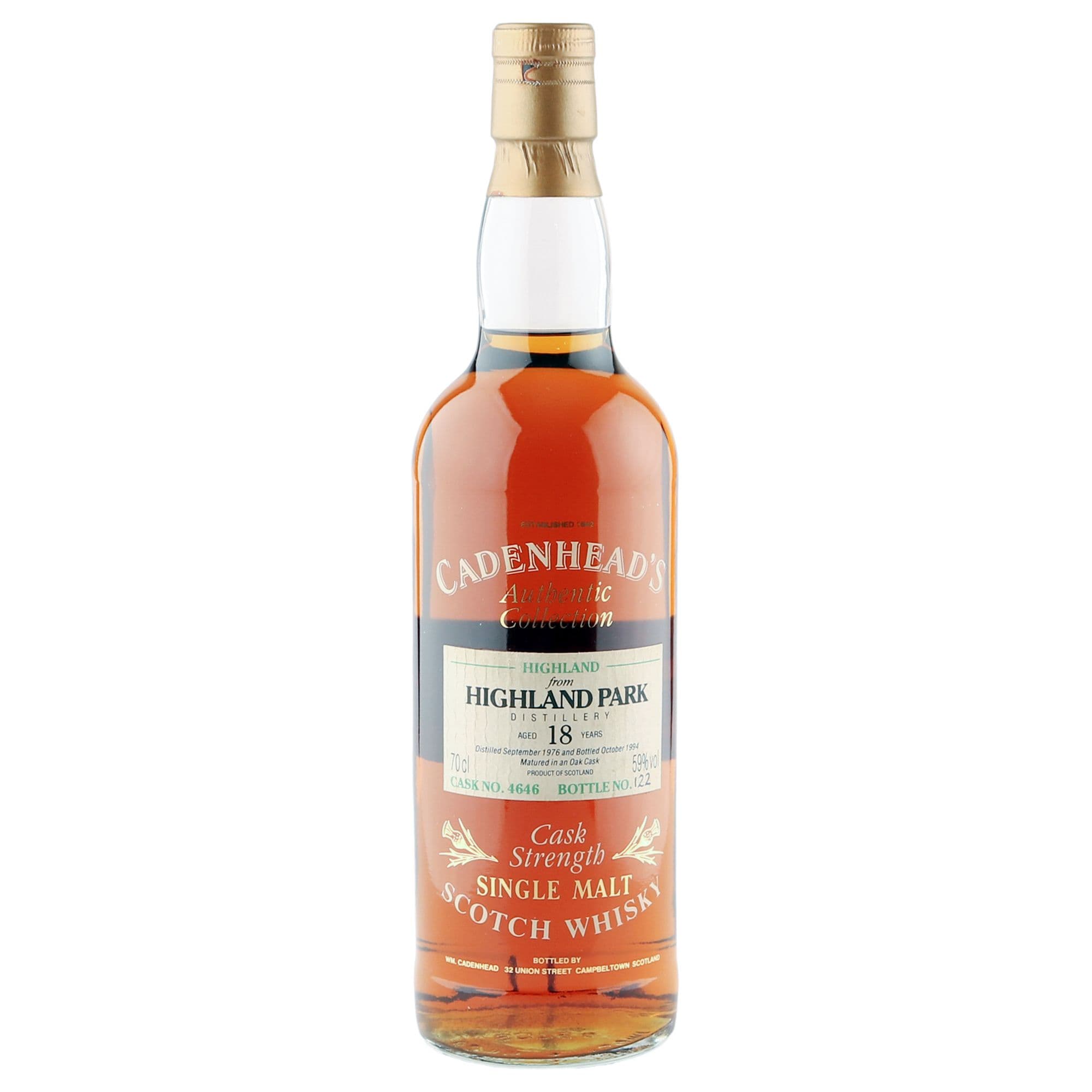
This stunning 18 year old Orkney Island single malt was distilled at Highland Park in September 1976 and bottled by Wm Cadenhead especially for wine and spirits retailer Oddbins in October 1994.
Yielded from single cask number 4646 at a natural strength 59% ABV, this epic Islander scored a quite magnificent 94 points with the WhiskyFun critics and is always highly sought after.
The Whisky Vault Price: net £3,333.33. Buy Here.
Highland Park 20yo, John Rebus 20th Anniversary Edition
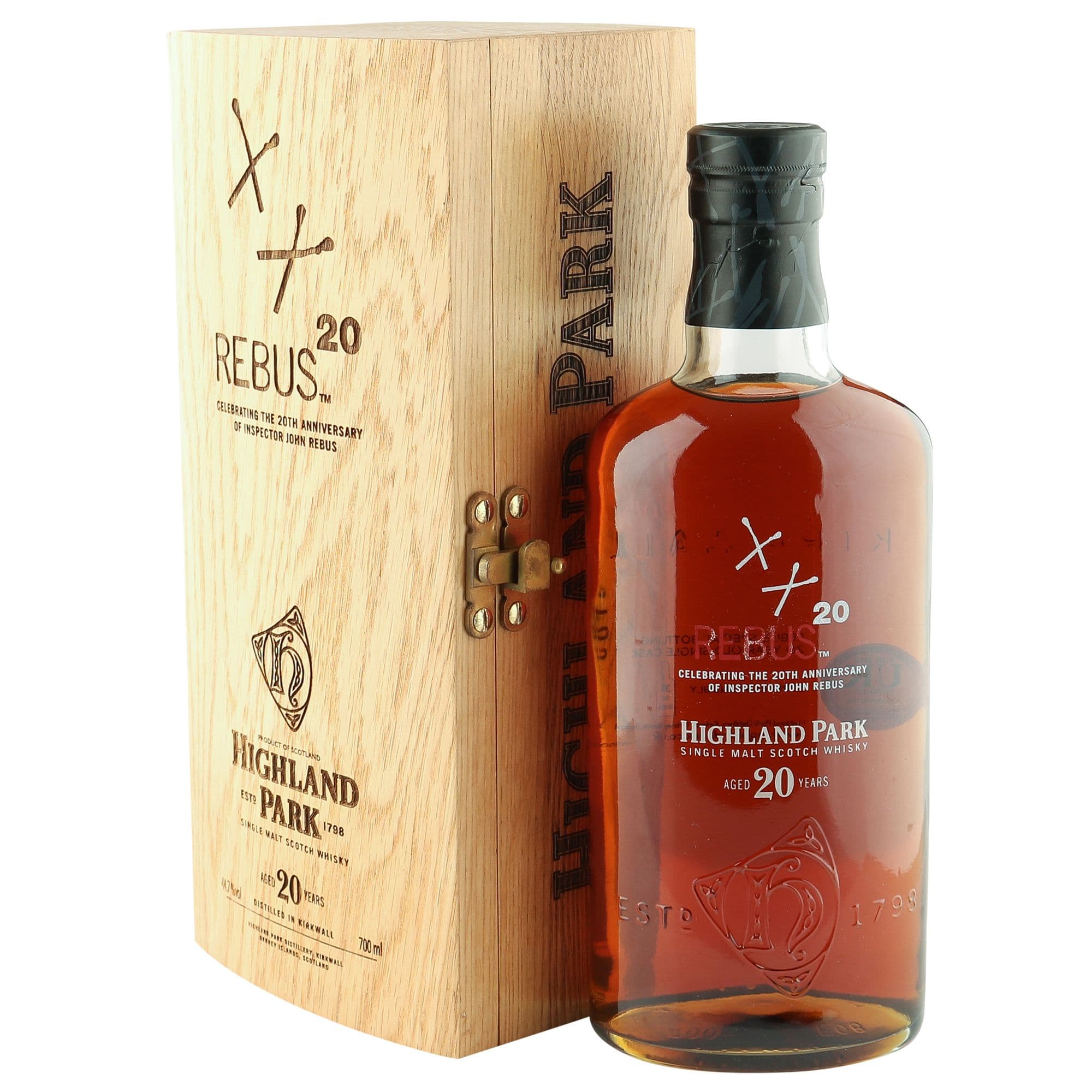
This exceptional Highland Park 20 year old single cask was bottled to celebrate the literary 20th Anniversary of Inspector John Rebus, the work of Scottish crime writer Ian Rankin, in 2007.
Just 150 bottles were yielded from cask 3272, specially selected by Mr Rankin on a visit to the distillery, all of which were presented to the celebrated author to dispose of as he saw fit - with many bottles benefitting charitable causes and auctions.
To add even higher prestige to this very rare and collectible malt, the inside of the stunning oak presentation case is hand signed by Mr Rankin himself and labelled as bottle number one (see 2nd image). We learnt from the original owner that this was signed at an exclusive event in London in 2007 and officially marked as the first bottle released by the author.
The Whisky Vault Price: net £3,333.33. Buy Here.
Brief Timeline of Highland Park Key Events: -
- 1798: Highland Park is founded, and known as ‘High Park’, by Magnus Eunson
- 1816: Excise officer John Robertson assumes control of High Park estate
- 1826: The distillery receives its official license to distil whisky
- 1876: Under the ownership of Stuart & Mackay, global exports commence
- 1895: James Grant purchases the distillery
- 1918: Following the aftermath of WWI, the distillery is mothballed for 2 decades
- 1937: Highland Distillers acquire the distillery and resume production
- 1979: After years of producing blends, the first official 12yo is released
- 1986: The distillery visitors centre opens to the public
- 1999: The Edrington Group acquire Highland Distillers
- 2023: The distillery celebrates its 225th anniversary with its oldest bottling (54yo)
A Legacy of Orkney, Nordic Spirit and Tradition
Highland Park's history is a reminder that great whisky is rarely the product of one invention or one moment of inspiration.
Its story begins with the traditions and legends of eighteenth-century Orkney, develops through the commercial expansion of the nineteenth century, and continues through the changing fortunes of the twentieth and twenty-first centuries.
Along the way, the distillery has retained a connection to its surroundings that remains central to its character.
And if the old stories are anything to go by, Magnus Eunson would probably have appreciated the fact that Highland Park still knows how to keep people talking!
To view all of our Highland Park stock, head here.